
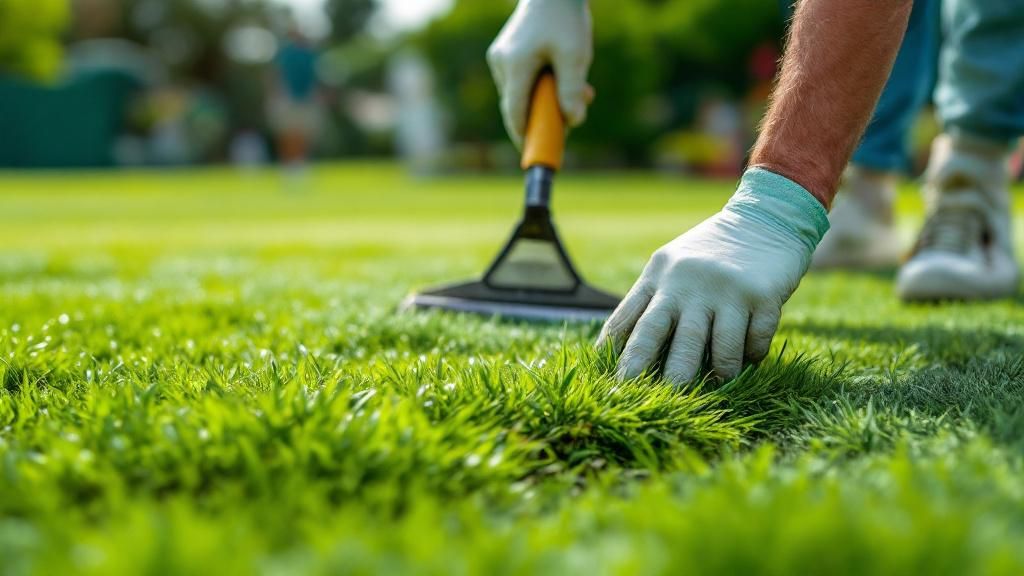
For over a century, Wimbledon’s pristine grass courts have captivated tennis devotees worldwide, yet few grasp the painstaking craftsmanship needed to preserve them. In an exclusive interview, the All England Club’s head groundskeeper unveils the closely guarded secrets behind these verdant masterpieces—from specialised grass varieties and precision mowing techniques to earth structure and yearly upkeep. Discover how years of horticultural knowledge and advanced systems combine to create the world’s finest tennis surface, guaranteeing every match is played on perfection.
The Science Behind Wimbledon’s Pristine Courts
Wimbledon’s grass courts embody a remarkable success of horticultural science and precise planning. The All England Club employs a sophisticated blend of traditional knowledge and modern technology to maintain surfaces that are simultaneously robust enough to withstand intense competitive play and aesthetically flawless. The head groundskeeper oversees a team of specialists who understand that grass court maintenance extends far beyond simple mowing, including soil chemistry, drainage systems, and precise moisture regulation throughout the year.
The choice of grass species creates the basis of Wimbledon’s achievement. The courts use a precisely maintained combination of ryegrass perennials and other complementary varieties, chosen specifically for their resilience and court behaviour. These grasses are identified through rigorous testing and comparison, guaranteeing they exhibit the perfect balance of density, uniformity, and visual quality. The groundskeeping team conducts ongoing trials to appraise novel strains, maintaining Wimbledon’s position at the forefront of playing surface development and quality.
Soil composition fulfils an essential yet often overlooked role in court performance. Beneath the visible grass surface lies a carefully constructed foundation consisting of multiple layers of different soil types, sand, and organic materials. This layered approach facilitates optimal drainage whilst maintaining adequate moisture retention during play. The groundskeepers regularly analyse soil samples to check nutrient levels, pH balance, and microbial activity, implementing modifications as necessary to maintain the ideal growing environment for the grass above.
Precision mowing constitutes another cornerstone of Wimbledon’s maintenance regime. The courts are trimmed to rigorous standards—typically maintained at approximately 8 millimetres throughout the tournament. Dedicated machinery, such as rotary cutters with multiple blades, guarantees a uniform cut that enhances reliable playing surface consistency and playing conditions. The cutting timetable adjusts according to grass development and climatic factors, with the groundskeeping team determining actions based on careful monitoring and historical data gathered throughout years of expertise.
Water management represents a delicate balancing act throughout the growing season. The groundskeepers employ sophisticated irrigation technology that deliver precise amounts of water to preserve optimal lawn quality without creating waterlogged conditions. During Wimbledon fortnight, moisture levels are constantly monitored and adjustment, as the combination of intense play, foot traffic, and summer heat presents unique challenges. The team employs weather forecasting data to predict needs and prevent both dry conditions and excessive water buildup.
Nutrition and fertilisation programmes are tailored to support the grass through distinct seasonal periods. The turf maintenance crew applies precisely balanced fertilisers at planned stages, encouraging strong development during spring and early summer whilst fortifying the turf before and after the tournament. Natural and chemical supplements work together to strengthen soil composition and nutrient access. This scientific approach ensures the grass possesses sufficient reserves to recuperate swiftly from the demanding nature of championship play.
All-Year Turf Care Methods
Wimbledon’s groundskeeping team operates on a carefully structured annual calendar that commences during autumn. Following the Championships, the courts receive extensive restoration, including scarification for dead thatch removal and aerating to boost soil condition. The winter period emphasises drainage upkeep and targeted overseeding using ryegrass varieties chosen for durability and visual appeal. Spring preparation increases in intensity ahead of the tournament, with feeding schedules designed to encourage strong development whilst maintaining optimal playing conditions throughout the summer period.
The shift through spring demands close focus to moisture management and disease prevention. The turf maintenance crew tracks soil moisture regularly, fine-tuning water delivery schedules based on weather patterns and seasonal variations. Targeted fungal and insect treatments are used proactively rather than after issues arise, maintaining the grass continues disease-resistant and strong. By late May, when the tournament start, the courts have undergone preparation to an immaculate standard through months of careful nurturing, resulting in the signature verdant playing surface that establishes Wimbledon’s standing.
Spring and Summertime Planning
As the weather warms in spring, the grounds crew increases their activity to prepare the courts for tournament play. Precision mowing begins at particular lengths, generally kept at thirteen millimetres during the major event. Rolling operations are carried out methodically to harden the playing area and ensure consistent ball bounce across all courts. Nitrogen-based fertilisers are administered in measured quantities to develop lush, strong sward without encouraging excessive growth that could affect court quality or require more frequent mowing.
Summer maintenance during the Championships demonstrates the height of the groundskeeper’s expertise. Routine assessments detect wear patterns, especially around baseline and net areas where competitor traffic intensifies. Prompt corrective measures, encompassing targeted irrigation and surface rolling, address any court imperfections. The team sustains ongoing surveillance against weather-induced issues, with contingency plans for heavy rain or sudden temperature spikes. This steadfast dedication guarantees uniform court standards throughout the championship period, allowing competitors to direct their attention on their performances.
High-End Equipment and Precise Tools
Wimbledon’s groundskeeping team employs an extensive range of cutting-edge machinery designed for lawn court upkeep. These specialized equipment, many custom-designed or modified for the All England Club’s demanding specifications, represent substantial expenditure in turf science. The precision equipment ranges from sophisticated irrigation systems to precision cutting equipment, each engineered to preserve the courts’ renowned playing characteristics. This technological arsenal, working alongside traditional craftsmanship, ensures reliable playing surfaces across the competition and year-round.
The choice and use of equipment demonstrates years of gathered expertise and sustained advancement within the grounds maintenance field. Each machine undergoes rigorous testing and calibration before the event starts, with consistent upkeep schedules followed throughout the year. The chief groundskeeper and their team understand that equipment performance significantly affects playing surface quality, player safety, and the tournament’s global standing. Spending on high-quality equipment underscores Wimbledon’s steadfast dedication to quality and maintaining its status as the sport’s premier destination.
- High-precision rotary cutters trim turf to precise millimetre tolerances.
- Laser-assisted boundary marking equipment ensure precisely aligned court boundaries.
- Ground hydration monitors track water content on an ongoing basis.
- Specialist aerating equipment encourages healthy root development each year.
- Bespoke irrigation systems supply exact water volumes daily.
The integration of contemporary technology with established groundskeeping methods exemplifies Wimbledon’s unique approach to grass management. Digital tracking technology monitor grass performance data in live fashion, enabling the team to react promptly to weather variations or developing problems. Weather forecasting technology enable proactive adjustments to water management plans and care protocols, forecasting requirements rather than simply responding to them. This progressive approach showcases how Wimbledon stays ahead of athletic court maintenance.
Beyond the tournament itself, the groundskeeping team employs advanced equipment for ongoing maintenance and restoration work. Specialised machinery facilitates overseeding programmes, thatch removal, and soil amendment processes crucial for court longevity. Training programmes confirm all staff members operate equipment with safety and efficiency, maintaining the highest professional standards. The ongoing development of groundskeeping technology, combined with Wimbledon’s commitment to adopting innovation, guarantees that future generations will enjoy equally immaculate playing surfaces.
